
Created On: January 17, 2026.
Rising Challenges for D2C Fashion Brands in India-2026

Shikhar Gupta
Founder: Lyfix Marketing
There was a time when starting a D2C fashion brand felt easy — Shopify stores, logistics partners, white-labelling manufacturers and ready-to-plug online checkout systems made it look simple. Today by 2026, every founder I talk to realises:
Easy to start ≠ Easy to sustain.
The fashion industry moves fast — trends change with seasons, Gen Z tastes shift overnight, and loyalty is harder than ever to earn. Trends aren’t just anecdotal; even festival data shows spikes like 25 % YOY growth for fashion D2C brands during Navratri 2025, driven by consumer demand for curated products as stated by The Economic Times.
But behind growth numbers lie fundamental operational challenges. Below are the core issues emerging in 2026 that every D2C fashion founder should know, with practical insight, examples, and what solutions look like.
1) Market Growth vs Profitability in D2C Fashion Brands
Observation:
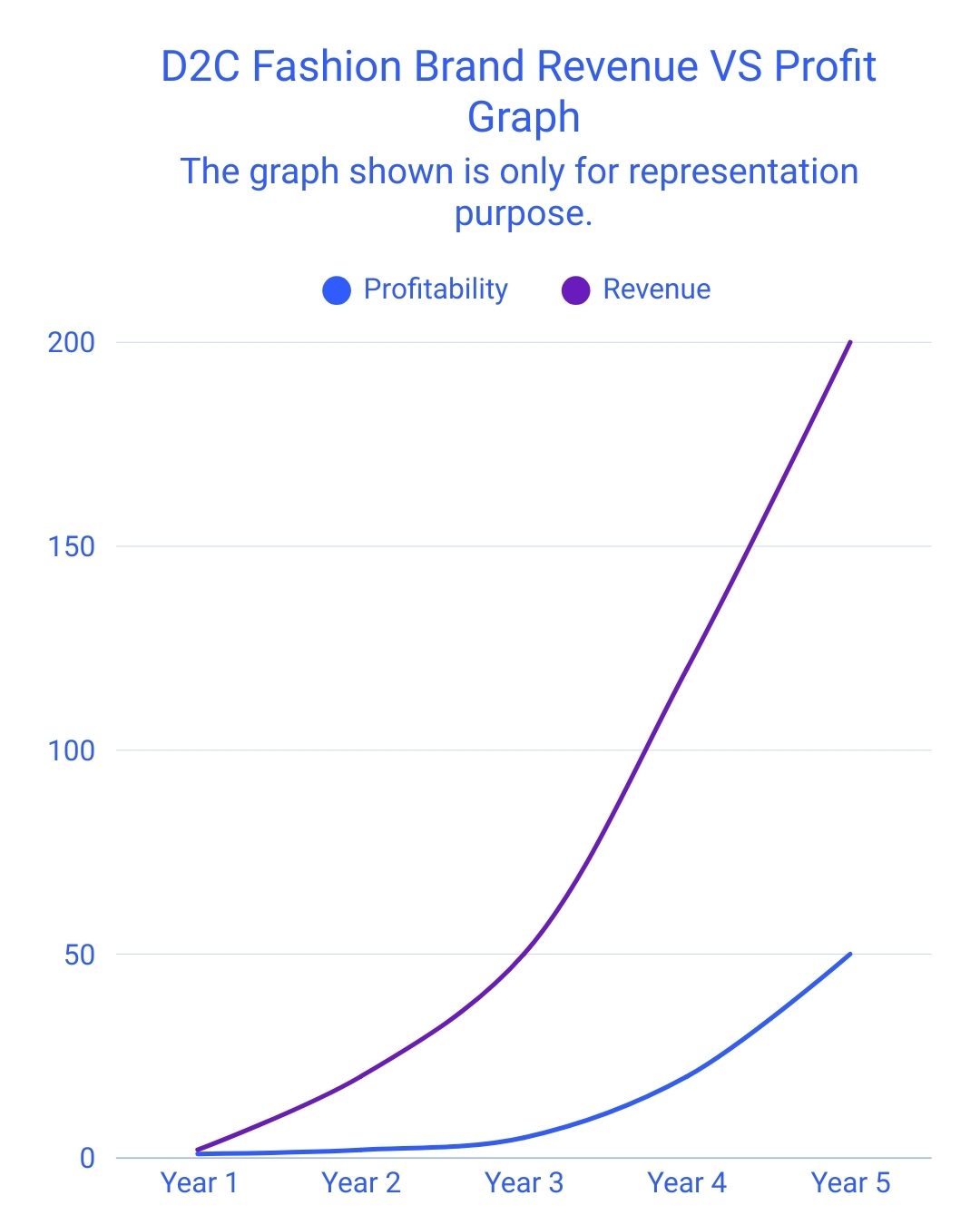
The D2C fashion market is booming — India’s D2C segment is expected to be worth ~$100 billion by 2025 and continues to grow rapidly. (d2cstory.com) Still, that explosive market size hides a profitability problem.
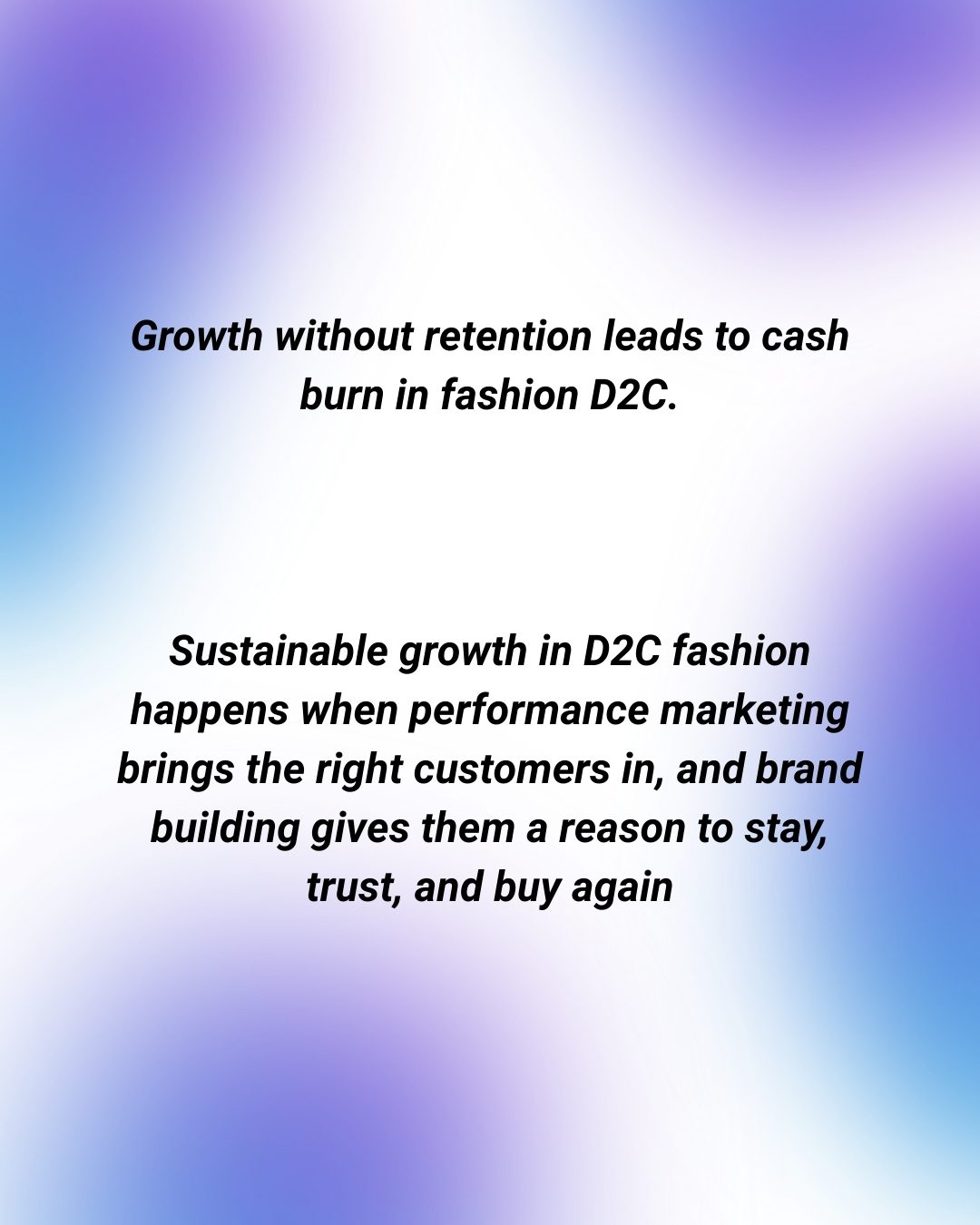
Most brands focus heavily on customer acquisition (CAC) — chasing traffic and order volume — while real profits only come once customers shop repeatedly.
Why this is a problem?
In fashion, repeat purchase is the key to profitability. Many brands lose money on first sale and only break even after 4-6 purchases from the same customer due to high CAC and cost of returns.
⏰Example Time⏰
Suppose you sell a T-shirt at ₹1,499:
- CAC = ₹1,200
- Margins after ads = ₹300
This means the first purchase barely breaks even. Unless the customer comes back again and again, you’re operating at a loss.
What helps?
- Build brand value beyond discounting — emotional connection, style identity, community.
- Focus on customer experience, making shoppers come back for the second and third purchase.
- Retention strategies like email/WhatsApp flows, post-purchase nudges, loyalty offers.
If you’re grappling with this, and want structured guidance on building lifetime value rather than one-off sales, you may book a free call to discuss deeper.
2) High CAC in D2C Fashion Marketing
Observation:
With algorithm updates and new AI-driven tools like Meta’s Advantage+ and Andromeda rollouts, acquiring customers is costlier than before — ads aren’t as cheap or predictable as earlier. (Envoli)
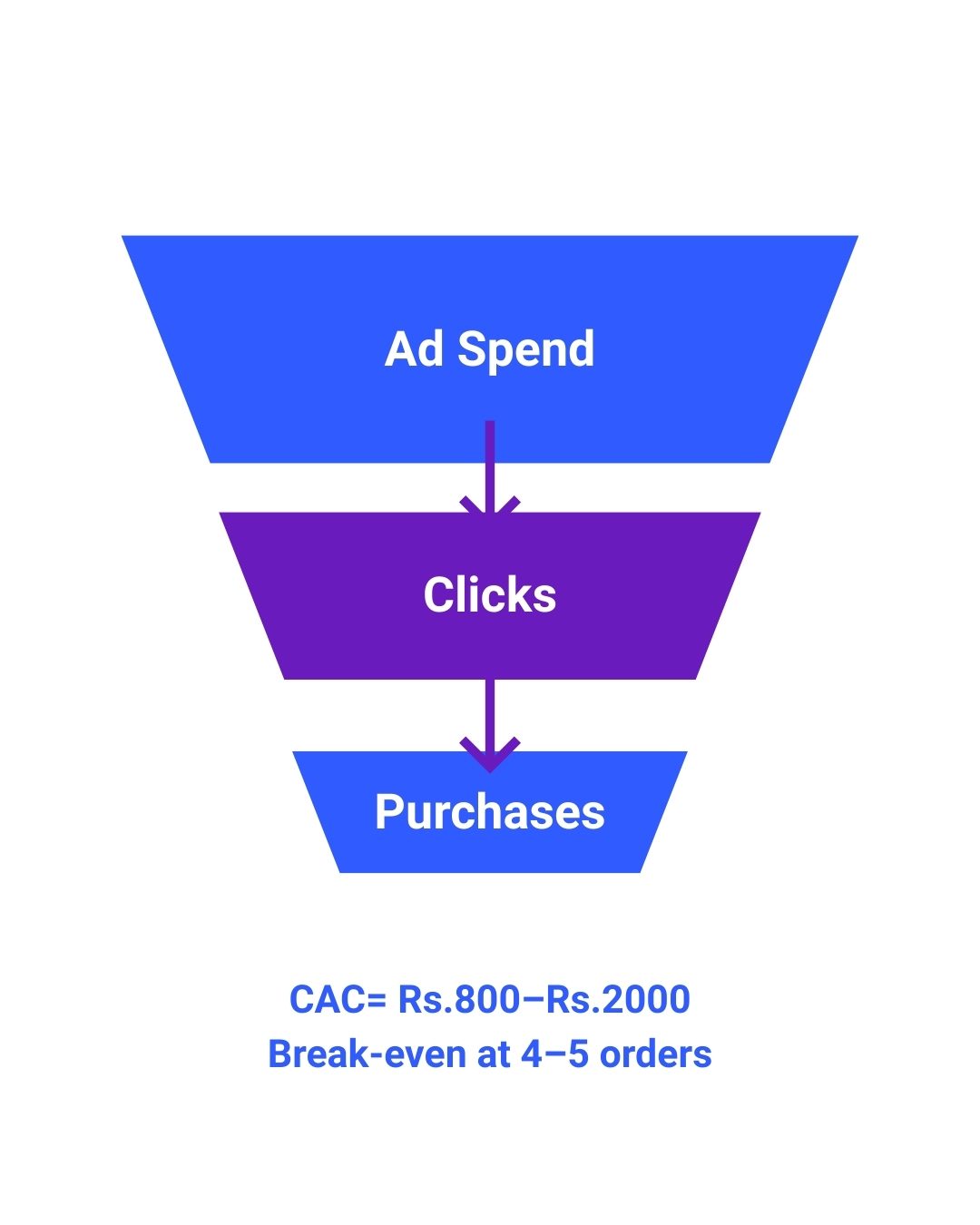
In India, founders are reporting CAC ranges from ₹800–₹2,000 per customer — which most brands can’t comfortably support on a first purchase.
Why this is a problem?
High CAC means you need more repeat purchases before a customer becomes profitable — and that becomes tougher when competition is intense.
⏰Example Time⏰
A brand selling kurtis spends ₹1,500 on a new customer but earns only ₹250 on the first order. If that customer doesn’t return, the entire acquisition spend becomes a loss.
What helps?
- Paid ads optimisation — better creatives, audience segmentation, funnel refinement.
- Testing multiple platforms beyond Meta to find lower CAC routes.
- Sophisticated retargeting & lookalike funnel strategies that reduce wasted spend.
This is an area where performance marketing expertise becomes essential. If you’d like help designing efficient ad funnels and improving ROAS, you can book a free strategy call.
3) High RTO Rates in Indian D2C Fashion Brands
Observation:
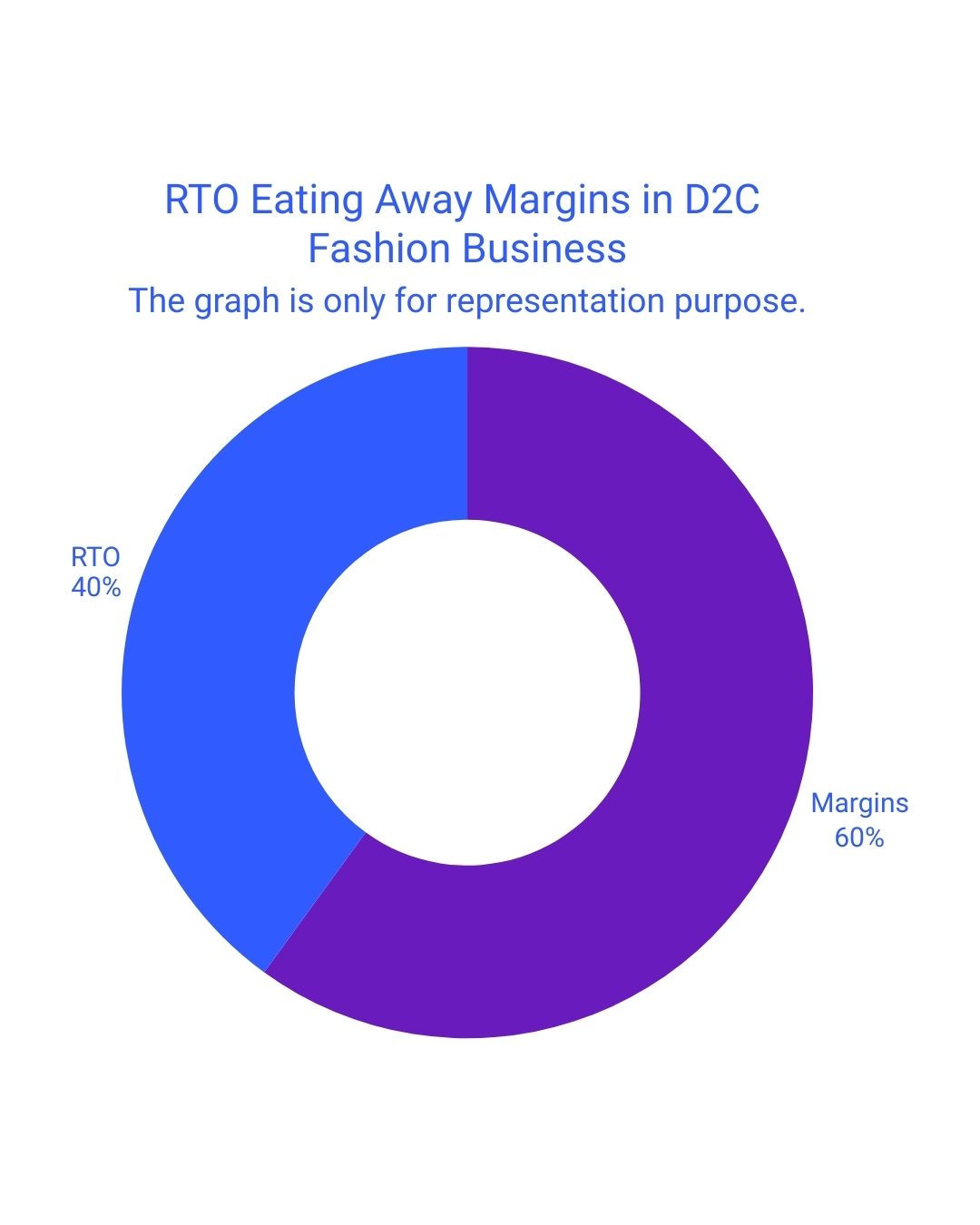
India’s D2C fashion sector suffers some of the highest return-to-origin (RTO) rates globally, often in the 25–40 % range. (Mordor Intelligence) That’s not just frustrating — it eats directly into margins
Why this is a problem?
- You pay two-way logistics (forward + reverse) with no revenue.
- Inventory gets stuck in warehouse, tying up cash.
- High RTO = uncertain demand forecasting.
Common causes:
- Size issues, colour mismatch, quality perception gaps
- Poor delivery timing — especially around festive seasons
- Incorrect addresses (funny as it sounds, it happens)
⏰Example Time⏰
A ₹2,000 jacket gets ordered but returned because the colour looked different than expected. Logistics like courier charges, inspection, re-packaging all cost money, and the brand earns nothing.
What helps?
- Add size guides, try-on videos, detailed product shots
- Display customer reviews and lifestyle images
- Convert COD orders to prepaid via incentives
- Manage first-party customer data to reduce speculative buys
Note: Anyone building retention strategies around first-party data (emails, WhatsApp) rather than third-party pixels will be better prepared, especially with privacy regulations tightening.
4) Why First-Party Data Is Critical for Fashion Brands
Observation:
Third-party tracking on platforms like Meta and Google is getting less reliable due to global privacy rules (GDPR) and India’s own DPDP data protection law, plus Apple’s tracking changes. This reduces audience understanding and ad efficiency.
Why this is a problem?
Less data = poorer targeting = higher CAC and wasted budget
What helps?
Shift focus to first-party data:
- Emails + SMS
- WhatsApp flows
- On-site behaviour tracking
Having these gives you a direct line to customers, better segmentation, and better ROI from your ad spend.

See how can I help you grow your brand.
Brand Building- Build more trust among your audience and become irreplaceable.
Performance Marketing- Increase your visibility and drive more sales using updated startegies.
5) D2C Fashion Brands vs Marketplaces like Amazon & Myntra
Observation:
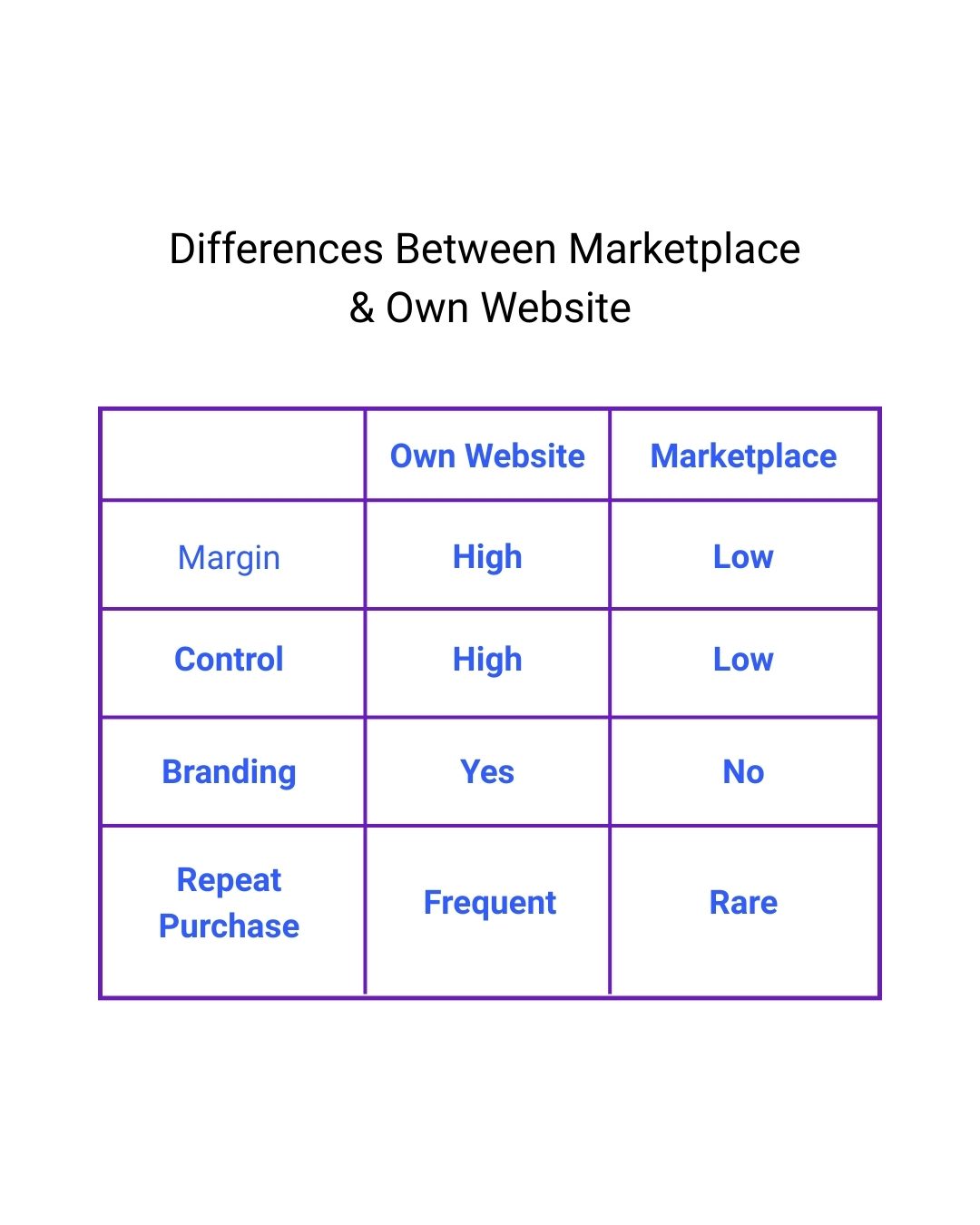
Marketplaces like Amazon and Myntra still capture a huge share of orders, often because customers feel safer buying there. In fact, studies suggest 60 %+ of D2C sales still come from marketplace channels. (The Economic Times)
Why this is a problem?
- Marketplaces can eat 30–40 % margin via fees and commissions.
- Brands lose brand ownership — customers remember Amazon, not you.
- It becomes harder to get customers back to your own website.
⏰Example Time⏰
Customers say “I bought it on Myntra” even when it was your product — because the marketplace is top of mind.
What helps?
- Use marketplaces to drive volume first
- Then migrate customers to your own channels (email/WhatsApp)
- Offer subscription benefits, loyalty perks, bundle deals to entice them back
Owning the customer relationship is key for repeat value and long-term profitability.
6) Lack of Brand Differentiation in Fashion D2C
Observation:
There are 800+ D2C brands in India alone competing for attention. (d2ctoday.com) Fashion choices have multiplied, and consumers are overwhelmed.
Why this is a problem?
Too many options with similar pricing, similar products, similar messaging → customers click away.
⏰Example Time⏰
Three brands selling “oversized hoodies” with the same price are shown to one customer — without a strong brand story, differentiation fails.
What helps?
Build emotional resonance:
- Brand story that connects
- Unique product positioning
- Clear body-type, culture, or lifestyle focus
This is where brand building matters as much as performance marketing — a strong brand becomes easier and cheaper to sell.
If you want help positioning your brand’s story and identity, feel free to book a free call.
7) Impact of Quick Commerce on Fashion Brands
Observation:
Quick commerce models (30-min delivery in cities) are pushing boundaries on speed — and while they excel in convenience, they don’t deliver trust and experience. Consumers increasingly want more than just fast delivery.
⏰Example Time⏰
Ordering an innerwear set in 30 mins might be great, but if the fabric quality is sub-par or size fit is wrong, the customer returns it next time.
What helps?
Focus on brand experience, storytelling and product quality — things quick commerce cannot match.
8) Sustainability & Changing Gen-Z Fashion Behaviour
Observation:
Eco-friendly, sustainable fashion isn’t a nice-to-have anymore — it’s a must have for Gen-Z and young Millennials.
Consumers are willing to pay more for organic fabrics, recycled packaging, and transparent sourcing.
⏰Example Time⏰
A brand uses recycled cotton and biodegradable packaging, features that become key differentiators in marketing messages and social stories.
Why this matters?
A genuine commitment to sustainability improves trust, reduces returns, and creates deeper loyalty.
“Written by a performance marketing and brand building specialist working closely with D2C fashion brands in India. The observations in this blog are based on industry trends, founder conversations, and market data.”
About the Author:
I am a performance marketing and brand building consultant focused on D2C fashion brands in India. I help brands optimize paid acquisition, improve customer retention, and create stronger brand recall in competitive markets. My perspectives come from continuous industry research, campaign analysis, and close collaboration with early-stage and growing D2C brands.
-Shikhar Gupta