
Created On: February 16, 2026.
Branding VS Performance Marketing in D2C : Where Most Founders Go Wrong

Shikhar Gupta
Founder: Lyfix Marketing
“Reading time: 8 mins”
Subscribe the Newsletter
“Stay Assured. We don’t spam.”
If you have ever asked yourself why your D2C brand is getting clicks but not conversions, traffic but not loyalty, or revenue but not profit — Branding VS Performance Marketing in D2C: Where Most Founders Go Wrong is the answer you have been looking for. This blog breaks down one of the most misunderstood dynamics in the D2C space today.
You will learn-
- What branding really means for a product-first business and why it has nothing to do with logos or colour palettes.
- How performance marketing works as a distribution tool and where its limits are?
Why product-market fit must come before any serious ad spend? - What metrics actually signal a healthy brand versus one that is burning money to grow?
- And how to align your brand-building and performance marketing efforts so that each one makes the other more effective over time.
“A candid conversation for founders who are spending on ads but still wondering why profit feels far away.”
Let me start with something most marketing consultants will never tell you in the first meeting — spending more on ads is usually not the answer.
I know that sounds strange. We live in a world where every D2C founder is running Meta campaigns, tracking ROAS on Google, testing creatives on Instagram, and refreshing dashboards every morning to see if last night’s ad spend did anything meaningful. And yet, despite all of that activity, despite the clicks and the impressions and the reach, there’s this quiet, nagging feeling that profit is always just one more campaign away. One better audience. One more A/B test. One lower CPM.
That feeling is real. And it’s telling you something important.
The problem, almost always, is not the ads. The problem is the order in which things are being built.
“Ads don’t fix what’s broken underneath. They just shine a brighter light on it.”
What Branding Actually Means — And What It Doesn't
Ask ten D2C founders what branding means to them, and you’ll get ten versions of the same answer. A logo. A colour palette. A well-curated Instagram grid. Maybe a brand film if the budget allows. Good packaging. A nice font.
That’s not branding. Or rather, that’s the visible surface of branding — the part you can photograph and put in a deck. But branding itself is invisible. It lives entirely in the mind of the person who encounters your product.
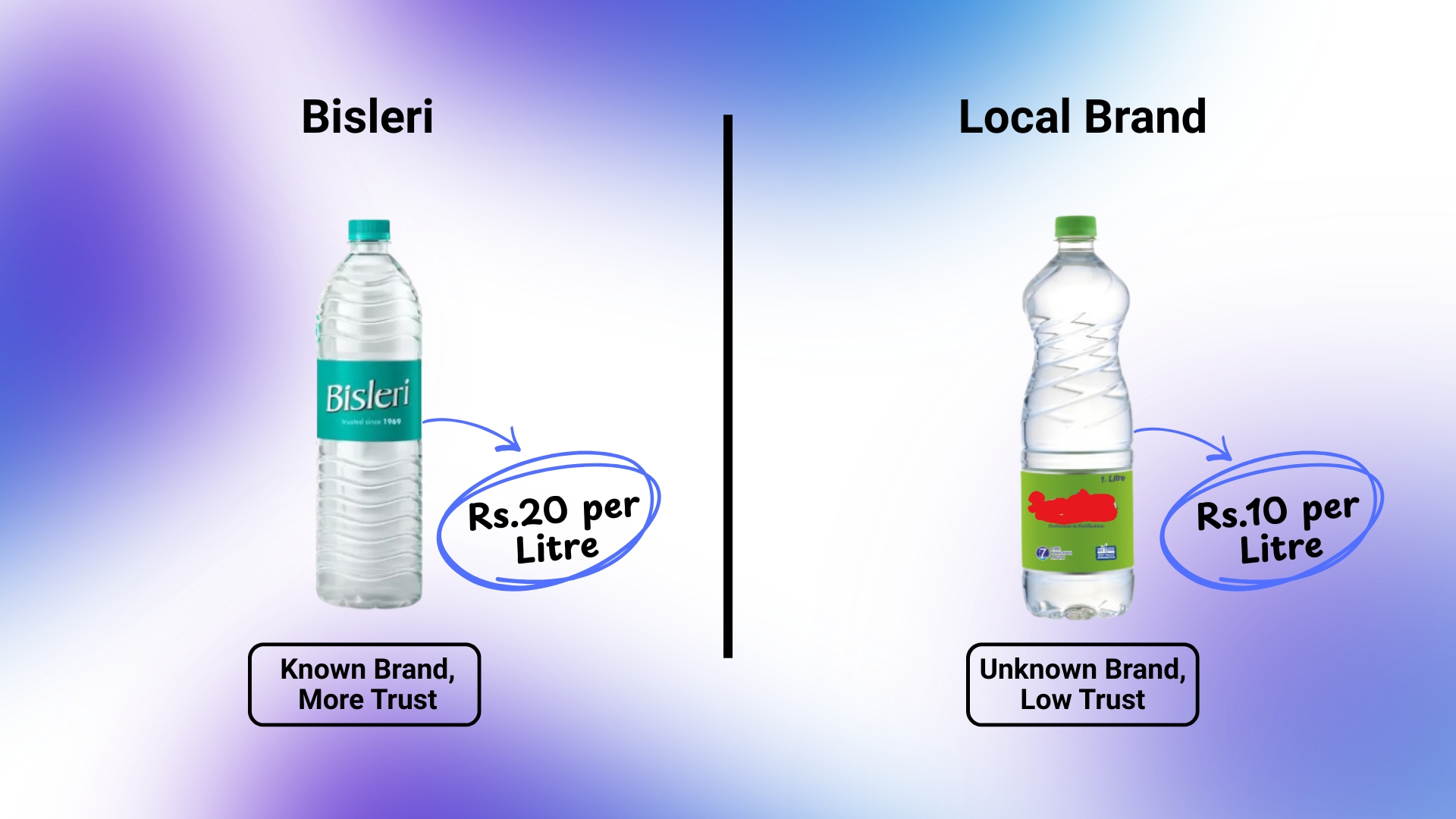
Here’s the simplest way I can describe it. Branding is the feeling a person carries before they decide whether to trust you.
Think about the last time you were standing in a shop or scrolling through an online store and you had to choose between two products at roughly the same price point. One was from a name you recognised, a brand you’d seen your friends use or talk about, a name that just felt familiar in a good way. The other was from a company you’d never heard of. The packaging might have been just as nice. The product description might have been just as compelling. But your hand still reached for the familiar one. Or your thumb still clicked the familiar link.
That moment — that near-automatic lean toward familiarity and perceived safety — that is branding doing its job. And notice that it happened before you read a single word of copy, before you compared prices, and certainly before any ad was involved.
“A strong brand doesn’t need to convince people. It just needs to feel like the safer choice.”
Now flip that around. When branding is weak — when no one quite knows who you are, what you stand for, why you exist, or why your product matters — every sales interaction becomes a negotiation. Every potential customer is starting from zero. And you have to fight, every single time, just to earn the basic trust that established brands already have before the conversation even begins.
That fight is exhausting. And it is expensive.
Performance Marketing Is a Distribution Tool, Not a Trust Machine
Now let’s talk about performance marketing. And let’s be generous about what it actually does well, because it does a lot of things well when used correctly.
Performance marketing is genuinely brilliant at one thing: getting your product in front of people who might want it. It can take something that already works and show it to more of the right people. It can remind someone who visited your site but didn’t buy. It can follow a customer back with the thing they left in their cart. It can find lookalike audiences that behave like your best customers. These are powerful capabilities, and the founders who understand them well can do remarkable things with a modest budget.
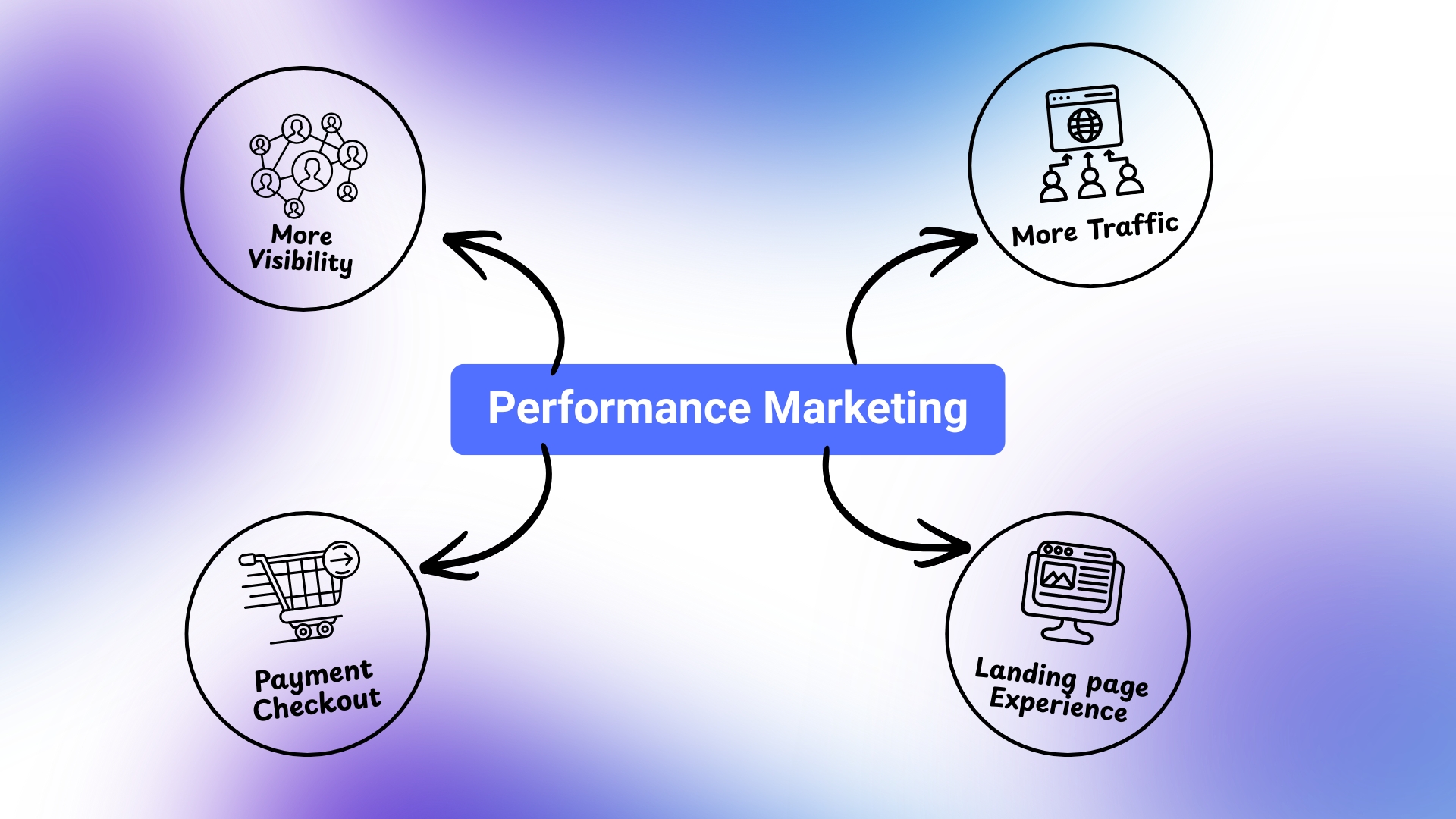
But there is a hard ceiling on what performance marketing can do, and almost no one in the D2C space talks about it honestly.
Performance marketing cannot create trust. It can only distribute what already exists.
“Think of performance marketing like a microphone. If what you’re saying is worth hearing, a microphone helps. But a microphone doesn’t make a bad message worth listening to — it just makes it louder”
I want you to sit with a very simple analogy for a moment. Imagine you’ve seen a film that you found genuinely disappointing — maybe the story didn’t land, maybe the acting felt flat, whatever the reason — and now imagine that the studio behind that film decided to do the biggest marketing push in their history. Billboards. TV ads. Social media blitz. Influencer partnerships. Every placement you can think of. Millions of people hear about the film.
What happens? More people watch it. More people are disappointed. And word spreads faster.
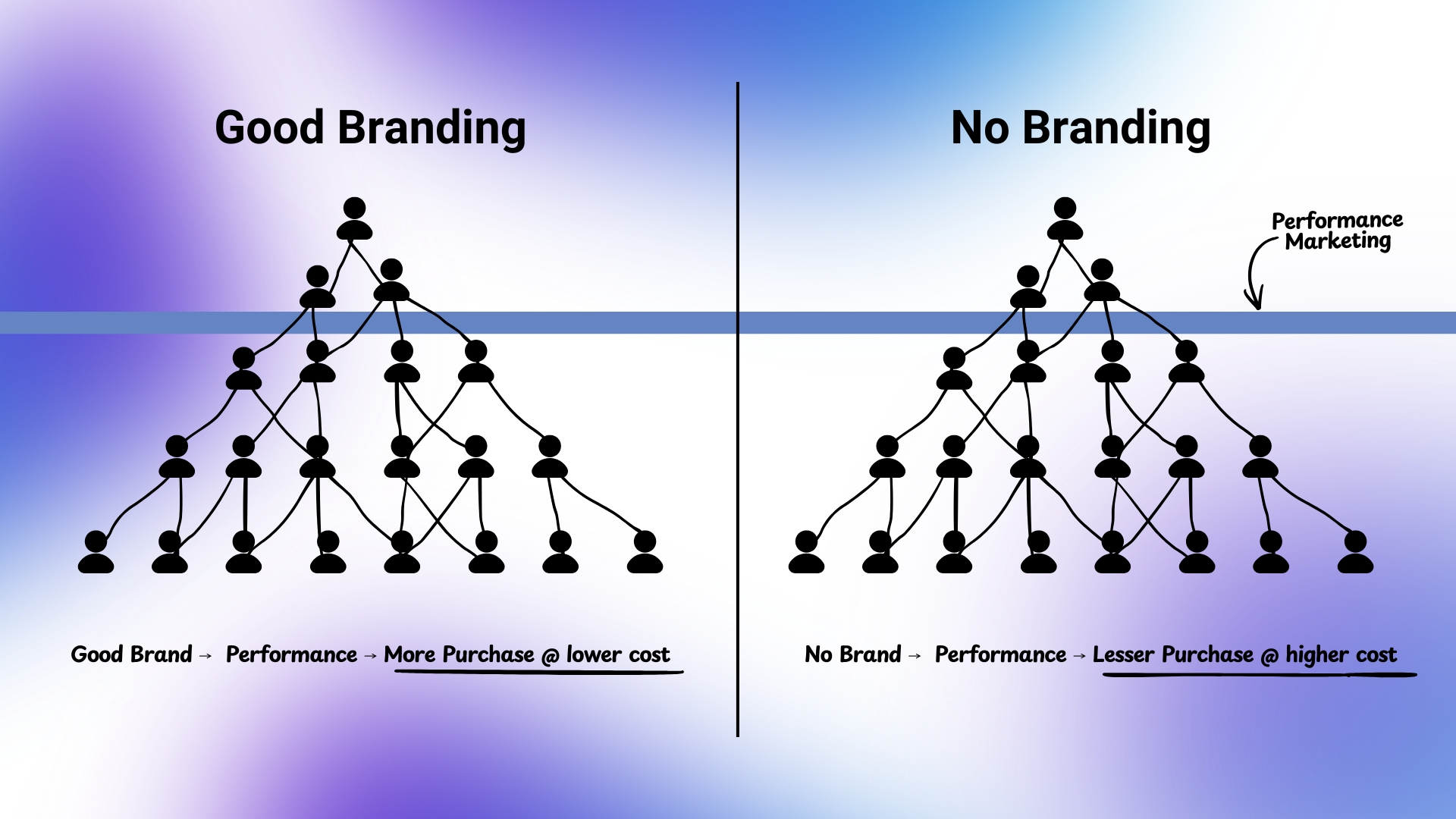
That is performance marketing applied to a weak product or a weak brand. The reach goes up. The trust doesn’t. And slowly, the returns on the spend get worse and worse because you’re not building anything — you’re just broadcasting a problem to a larger audience.
Visibility and Trust Are Not the Same Thing for D2C Brands
There’s a belief that’s deeply embedded in the D2C world, and it comes from a very reasonable-sounding place. The belief is this: if more people see my brand, more people will buy. Awareness leads to sales. Reach is everything.
And on the surface, it makes sense. You can’t sell to someone who doesn’t know you exist. That part is true. But visibility and trust are two completely different things, and conflating them is where so many founders start losing money without understanding why.
Here’s a way to feel that difference physically. Imagine you’re walking down a busy street and you see a store with a massive, bright, eye-catching shopfront. The board is huge. The lighting is dramatic. There’s maybe even some music playing to pull you in. Curiosity wins, and you walk in.
And the experience inside is forgettable. The staff seem indifferent. The product feels like it doesn’t quite live up to the promise of the shopfront. You leave having bought nothing, or maybe having bought once out of politeness. But you don’t go back.
Now, every time you walk past that shopfront again, something interesting happens. You don’t feel the same curiosity. You feel something closer to caution. The visibility is still there — the big board, the bright lights — but the trust is gone, and no amount of shopfront renovation is going to bring it back. You’ve experienced the inside.
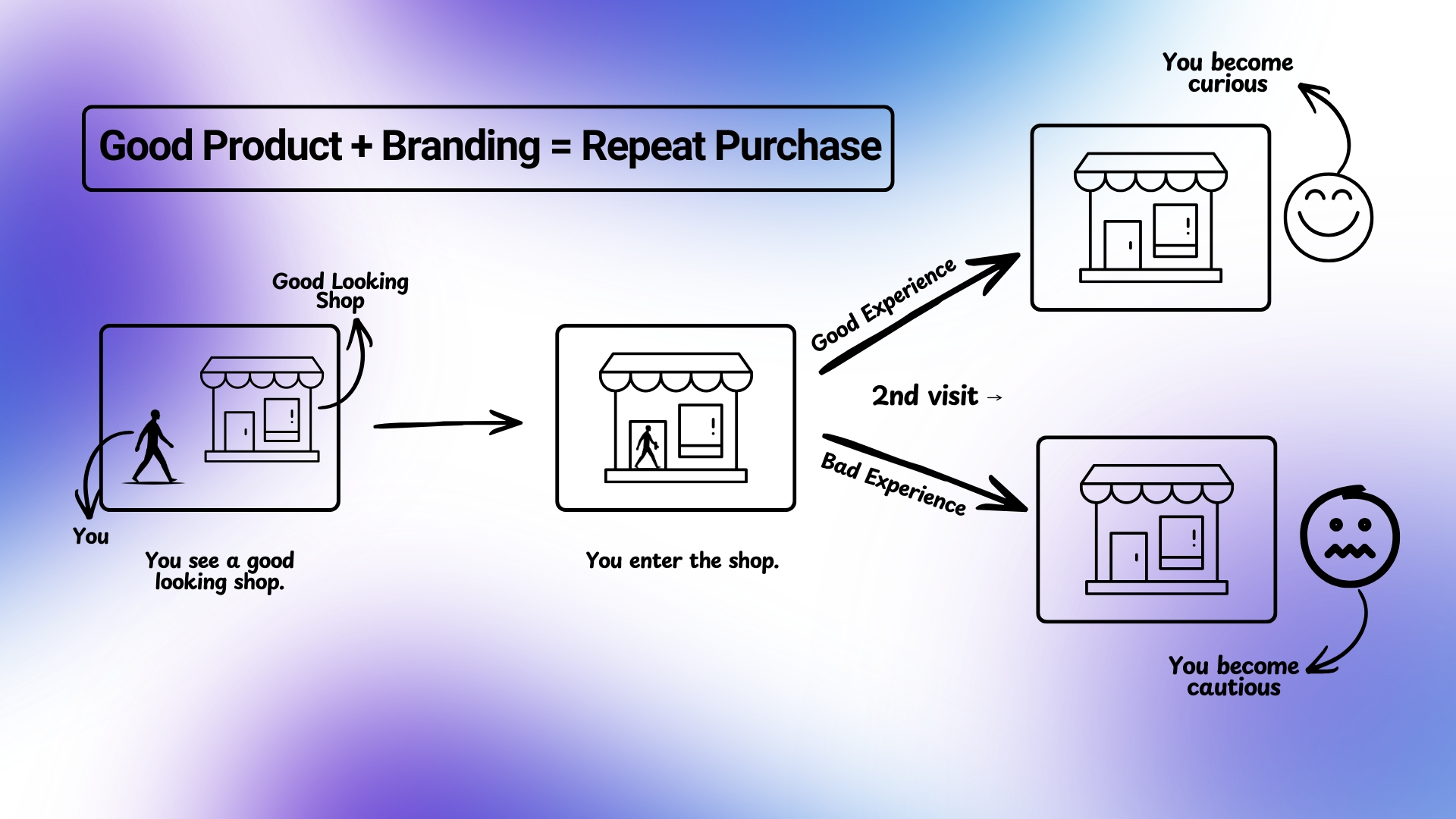
“More visibility after a bad experience doesn’t rebuild trust. It just reminds people of what disappointed them.”
This plays out identically in digital D2C. When founders pour ad spend into a brand or product experience that hasn’t been properly built yet, they generate initial traffic, maybe even some initial purchases. But the repeat rate is poor. Reviews are lukewarm. Word of mouth is absent or, worse, negative. And every new campaign has to work harder than the last to convince cold strangers, because the warm word-of-mouth engine that comes from genuinely satisfied customers simply isn’t turning.

See how can I help you grow your brand.
Brand Building- Build more trust among your audience and become irreplaceable.
Performance Marketing- Increase your visibility and drive more sales using updated startegies.
What is the correct sequence in D2C- from Product to Marketing
If there’s one idea in this entire piece that I’d want you to hold onto, it’s this: product-market fit comes before branding, and branding comes before heavy ad spend. Not after. Not simultaneously. Before.
Every brand that now seems obvious and inevitable — the ones you see everywhere, the ones your friends talk about without being prompted — started in a much quieter way than we tend to remember. They started with a product. They sold it to a small group of people. They listened, sometimes painfully, to what those people said about it. They fixed things. They sold to a slightly larger group. Some of those people came back. Some told their friends. And that cycle of organic return and organic recommendation — small and unglamorous as it looks in the early days — that is the signal that something real is being built.
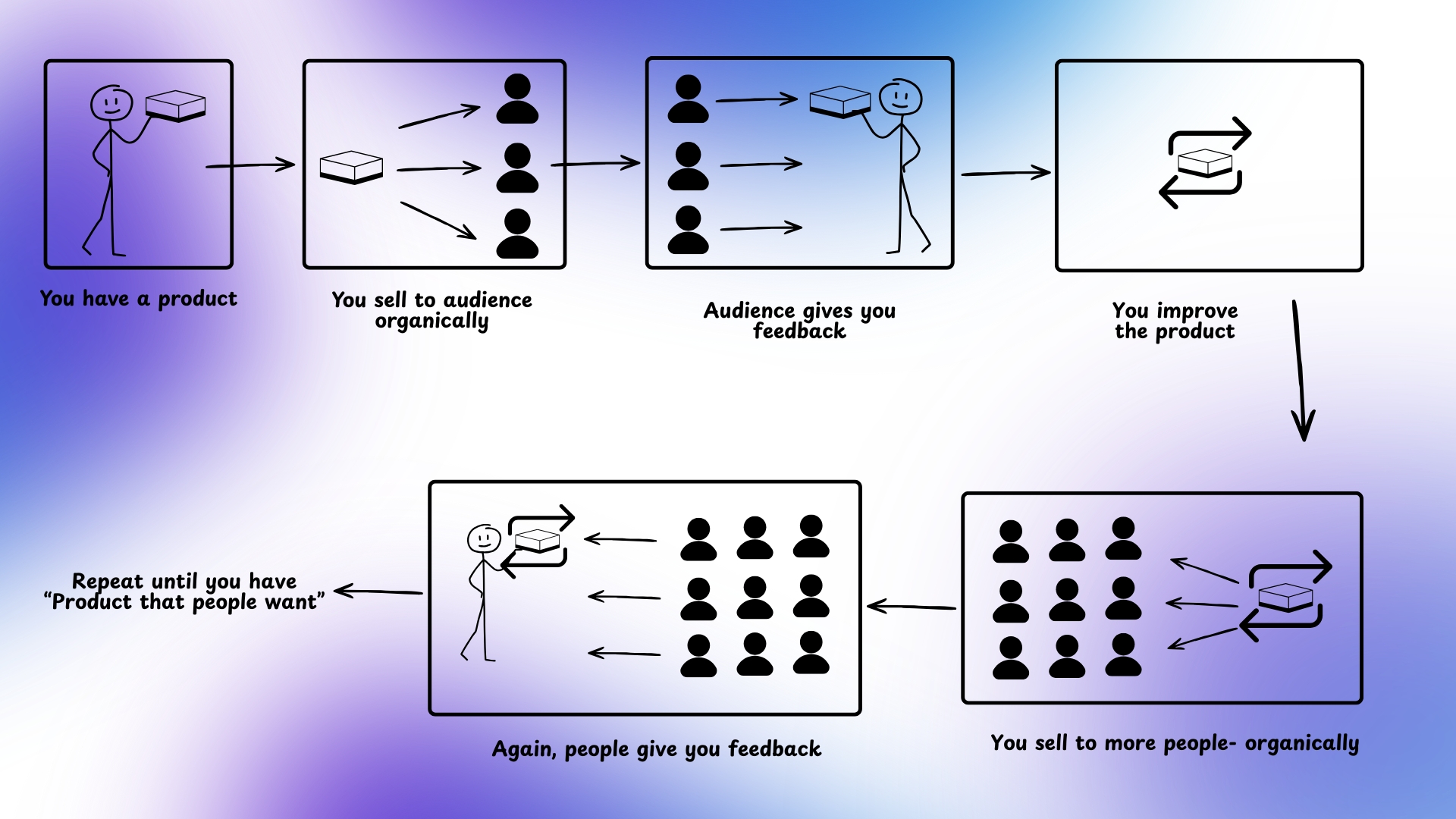
Marketers call it product-market fit, which is a clean technical term for a messier human truth: some people actually want what you’re making, and some of them want it badly enough to come back for more and tell others about it. Until that’s happening, at even a modest scale, throwing ad money at the problem is like trying to fill a leaking bucket by pouring water in faster.
“The repeat purchase is the most honest signal in D2C. It tells you whether what you built is actually worth building.”
The repeat purchase is not exciting. It doesn’t show up in your launch campaign metrics. It doesn’t make for a great announcement post. But it is the only real proof that your product and your customer experience are working. And without it, every single customer you acquire through performance marketing is a cost with no compounding return. Your CAC stays high. Your LTV stays low. And the unit economics never reach a place where scaling actually means growing, rather than just spending more.
What the Big Brands Like Nike and Apple Actually Understand
It’s worth spending a moment on the brands that seem to make this look effortless, because understanding what they did — and when they did it — is more useful than admiring the end result.
Nike doesn’t really sell running shoes. Not in the way that sentence sounds, anyway. Of course they sell physical products. But the reason a school kid asks their parent for Nikes rather than a cheaper alternative with equivalent rubber and cushioning isn’t a rational one. It’s an identity one. Wearing Nike means something in the social world that child inhabits. It signals something about who you are and who you want to be.
It’s worth spending a moment on the brands that seem to make this look effortless, because understanding what they did — and when they did it — is more useful than admiring the end result.
Nike doesn’t really sell running shoes. Not in the way that sentence sounds, anyway. Of course they sell physical products. But the reason a school kid asks their parent for Nikes rather than a cheaper alternative with equivalent rubber and cushioning isn’t a rational one. It’s an identity one. Wearing Nike means something in the social world that child inhabits. It signals something about who you are and who you want to be.
That meaning — that accumulated cultural weight — was built over decades through consistent storytelling, through association with greatness, through being present at moments that mattered to people. It wasn’t bought with ad spend. The ad spend came after.
Apple is even more instructive. Apple products are not objectively superior in every measurable category. But the feeling of opening an Apple product, the aesthetic consistency across every touchpoint, the sense that the brand genuinely believes in simplicity and quality — these feelings were constructed deliberately, over time, and they are why millions of people will happily pay a significant premium. The marketing didn’t create those feelings. The product and the brand experience did. The marketing then distributed those feelings to a wider audience.
“Big brands don’t sell product. They sell identity. Nike sells you the feeling of a sportsperson- Apple sells you premium status.”
In fashion, think about what Zara and H&M actually sell. A jacket from either of these brands costs a fraction to manufacture of what you pay for it at the till. And yet the transaction feels fair to most buyers. Why? Because the store experience is considered. The brand feels current and relevant. There’s a social acceptability to carrying that bag or wearing that label. The value isn’t in the jacket — it’s in the feeling the jacket gives you. That feeling is the product of years of brand building, and it makes every single sale easier, because the customer comes in already convinced that the purchase is worth it.
Alex Hormozi describes a principle that maps onto this exactly: when the perceived value of something is dramatically higher than its price, selling stops being selling and becomes order-taking. The brand has already done the work. The customer has already decided. The transaction is just the paperwork.
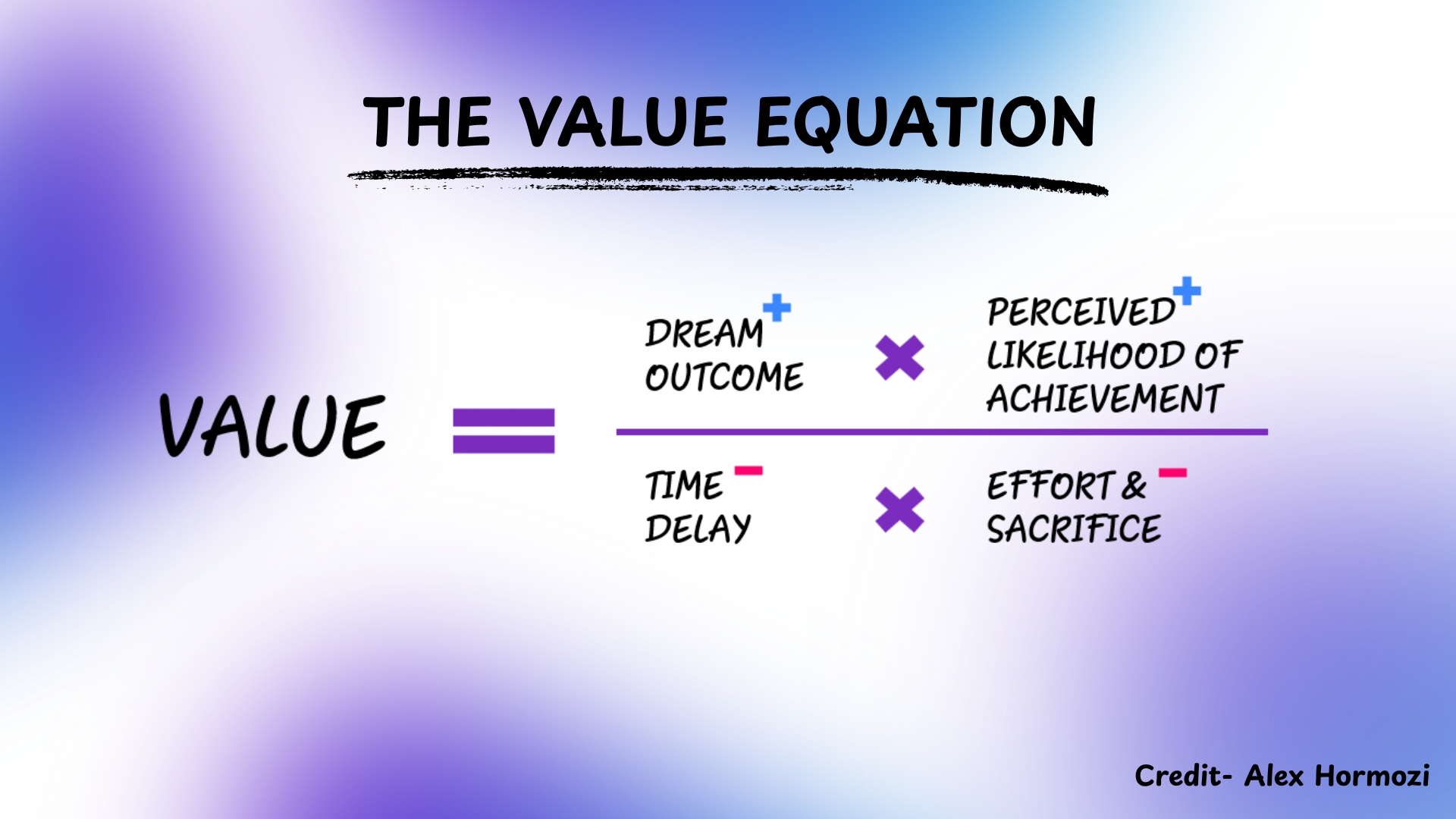
“The best D2C brands don’t sell hard. They’ve already sold — through the brand — before the customer lands on the product page.”
Why Do So Many D2C Founders fail?
It would be easy and unfair to suggest that founders are simply making an obvious mistake. The truth is more nuanced, and more sympathetic, than that.
Performance marketing is immediate. You put money in, and within 48 hours you have data. You can see clicks. You can see sessions. You can see whether someone added to cart. In a world full of uncertainty, that feedback loop feels like clarity. It feels like control.
Brand building is slow. The effects are delayed. They’re hard to measure. They show up as higher conversion rates months later, or as a customer mentioning your name to a friend, or as someone searching for you specifically rather than discovering you through an ad. None of these signals are tidy. None of them show up on a dashboard in real time. And in the early days of a D2C business, when runway is limited and every rupee counts, the invisible long game is incredibly hard to justify.
So founders bet on what they can see. They scale what looks like it’s working on paper. And the metrics say things are going well — the reach is up, the traffic is up, the revenue might even be up — right until the moment they look at the bank account and realise the numbers don’t match the feeling of progress.
“You can be busy, visible, and growing on every dashboard and still be moving slowly toward a wall.”
That disconnection between dashboard performance and actual profitability is the most common symptom of this misalignment. It’s not that the ads aren’t working. It’s that the ads are doing their job — driving traffic and generating purchases — but those purchases aren’t compounding into a brand that gets cheaper to grow over time. Each customer costs about as much as the last. Nothing is getting easier.
How Branding & Marketing Are Supposed to Work Together?
I want to be clear about something: this is not an argument against performance marketing. It’s an argument for doing things in the right sequence.
When a brand has done its foundational work — when the product is genuinely good, when the customer experience holds up, when there’s a clear and consistent reason for the brand to exist that resonates with a specific group of people — performance marketing becomes dramatically more effective. The conversion rates are higher because the brand already earns some trust on arrival. The repeat rates are higher because the product actually delivers. The CAC comes down over time because organic word of mouth starts to do some of the work that paid media used to do alone.
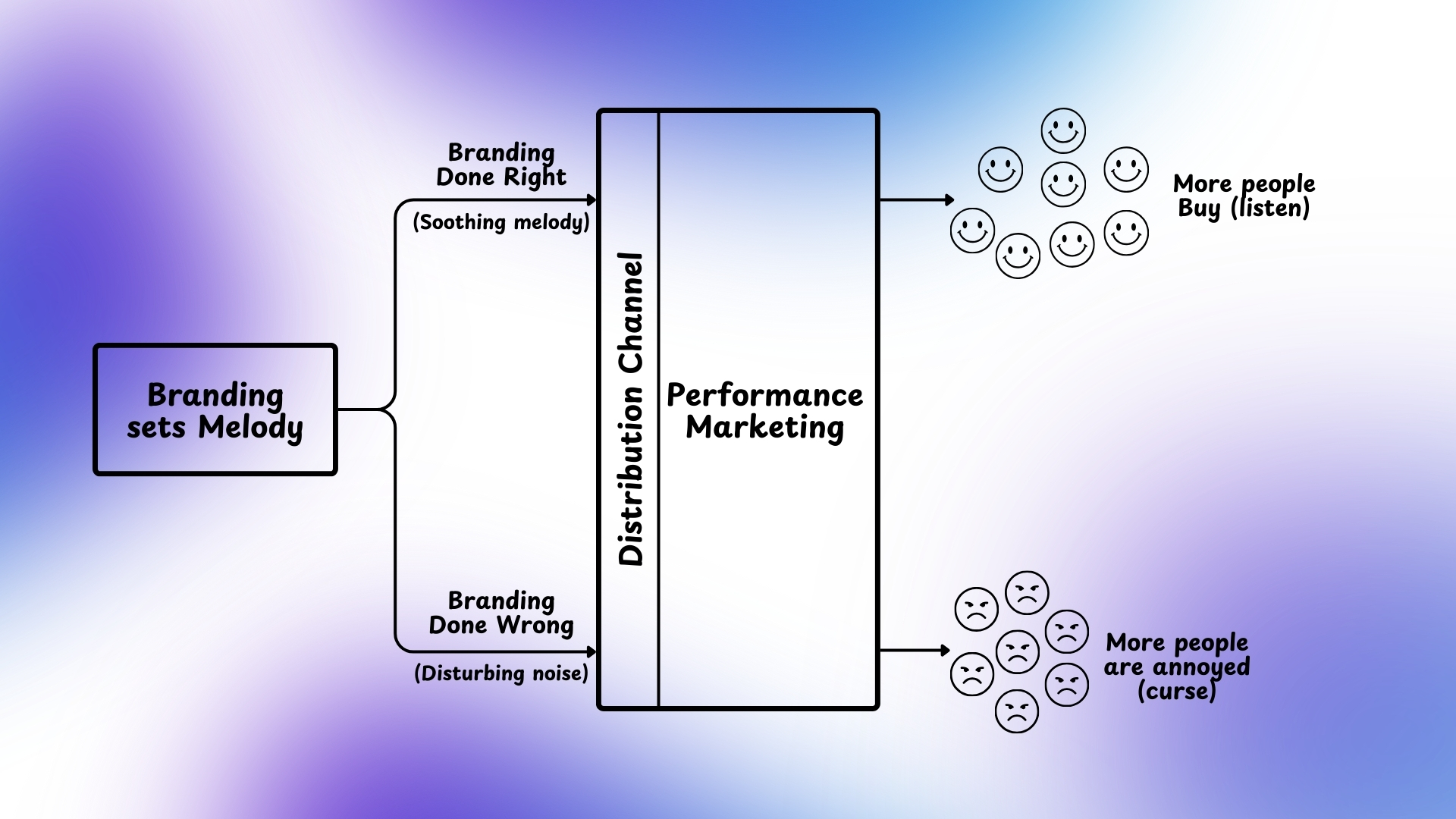
Think of it as two instruments that need to be playing the same song. Branding sets the melody — the feeling, the identity, the reason to care. Performance marketing amplifies that melody and carries it to more ears. But if there’s no melody, no amount of amplification helps. You’re just broadcasting noise to more people.
The brands that figure this out — usually not in the first year, sometimes not until they’ve spent painfully on the wrong lesson — find that growth starts to feel qualitatively different. It gets less exhausting. Individual campaigns start working harder. Customers don’t need to be persuaded from scratch every time. And the unit economics quietly, slowly, start to turn in the right direction.
“Branding brings people back. Performance marketing brings people in. A D2C business needs both — but in that order.”
Key Takeaway:
If you’re running a D2C brand right now and you’re frustrated — if your CAC is stubbornly high, if repeat purchases are sparse, if your ads look healthy on paper but the business doesn’t feel healthy — I’d ask you to resist the temptation to optimize the ads first.
Ask instead: does my product genuinely delight the people who try it? Do they come back? Do they tell anyone? Is there something real at the centre of this brand — a value, a perspective, a reason to exist — that people can feel and relate to? Is the experience of buying and using my product consistent with the story I’m trying to tell?
If the answers to those questions are uncertain, then more ad spend will not save you. It will just take you to the same destination faster and at greater cost.
But if the foundation is there — if the product works, if the brand means something real, if customers are genuinely pleased when they engage with you — then performance marketing becomes one of the most powerful tools in your hands. Because now it’s not broadcasting a problem to more people. It’s introducing something worth knowing about to the people most likely to care.
That’s when everything changes. That’s when ads stop being an expense you hope will pay off and start being an investment in growth you can actually see compounding.
And that’s the version of D2C that people actually build something lasting with.
Know- What are the problems that D2C Fashion brands are facing in 2026- “Click Here“
“Written by a performance marketing and brand building specialist working closely with D2C brands in India. The observations in this blog are based on industry trends, founder conversations, and market data.”